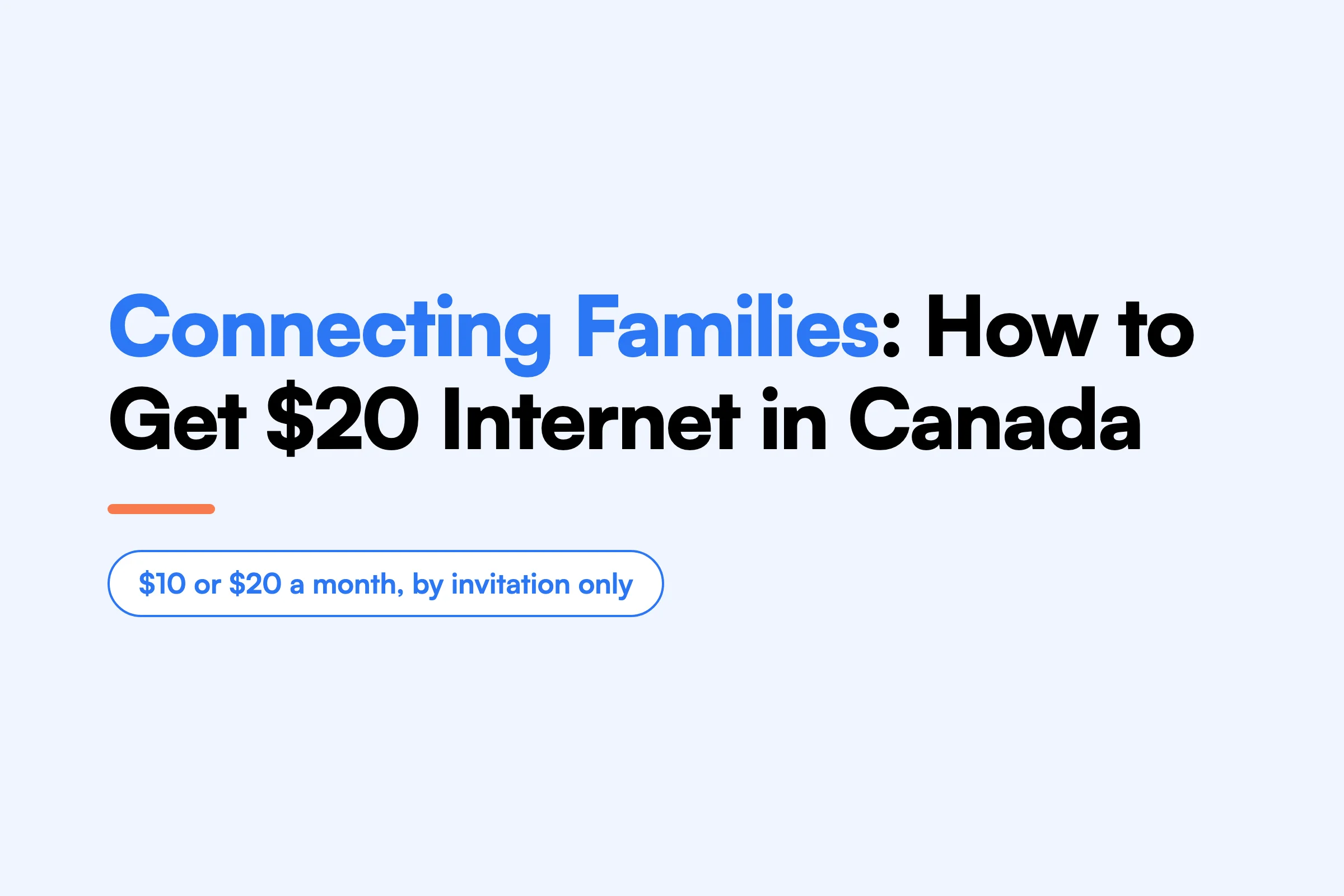
You can't "apply" for Connecting Families the way you apply for most benefits. There's no open form and no waitlist you can add yourself to. Instead, the Government of Canada decides who is eligible, mails those households an invitation letter with a one-time access code, and lets them sign up for home internet at $10 or $20 a month through a participating provider.
That catches a lot of people off guard. If you're a family on the Canada Child Benefit or a senior on the Guaranteed Income Supplement and you've been searching for how to sign up, this guide walks through who qualifies, exactly how to claim the plan once you have your letter, and what to do if you're eligible but the letter never showed up.
Key Takeaways
- There's no application form. The government identifies eligible households from benefit data and mails them an invitation letter with a unique access code. You can't sign up without one.
- Two groups qualify: families who receive the maximum Canada Child Benefit (CCB), and seniors who receive at least 80% of the maximum Guaranteed Income Supplement (GIS).
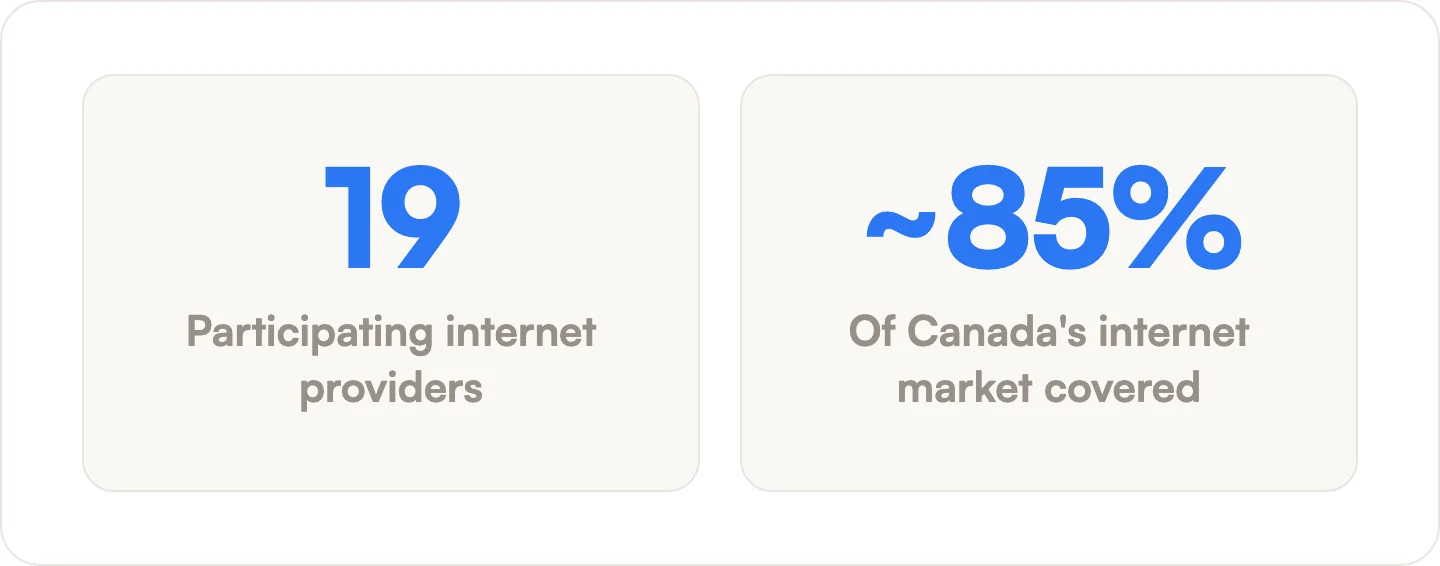
- Plans cost $10 or $20 a month (plus tax) through 19 participating internet providers that together serve about 85% of Canada's market.
- Got your letter? Register at the Connecting Families portal with your code and address, then choose a provider that serves your area.
- Eligible but no letter? Make sure you're actually receiving the maximum CCB or GIS, keep your taxes filed, and know that eligibility is reviewed every year.

What Is the Connecting Families Initiative?
The Connecting Families Initiative is a Government of Canada program that gives low-income households access to cheap home internet. It's run by Innovation, Science and Economic Development Canada (ISED), and internet providers take part voluntarily. They cover the cost of the discounted plans themselves, with no government subsidy.

The program launched in 2018 with a single $10 plan. Connecting Families 2.0 launched on April 1, 2022, adding a faster $20 plan and opening the program to low-income seniors for the first time. Eligible households can also request a low-cost computer or tablet while supplies last.
The catch is the one in the intro: you don't apply. The government picks eligible households and contacts them directly.
Who Qualifies for Connecting Families?
Eligibility comes down to one of two federal benefits, and you need to be receiving the top amount:
- Families: you qualify if you receive the maximum amount of the Canada Child Benefit (CCB).
- Seniors: you qualify if you receive at least 80% of the maximum Guaranteed Income Supplement (GIS), per the same ISED eligibility rules.
The government confirms eligibility every year based on your household income and your CCB or GIS benefits. That means your status can change from one year to the next as your income and benefits change.
How to Check If You Qualify Before a Letter Arrives
You don't have to wait for the mail to get a sense of where you stand. The amount of CCB or GIS you receive is tied to your income, so you can estimate it yourself:
- Families can use the government's Canada Child Benefit Calculator to see whether they're receiving the maximum amount. If you are, you're in the eligible range.
- Seniors can use the GIS Estimator to check their supplement amount against the 80% threshold.
The single most important thing you can do is file your taxes every year, on time. The Canada Revenue Agency uses your return to calculate both benefits, and that data is what decides whether you're invited. Miss a return and the system can't confirm your eligibility. If you want to track the payments themselves, our guides to CCB payment dates and OAS and GIS payment dates lay out the schedule.
How to Get Connecting Families Internet: Step by Step
Once your invitation letter arrives, claiming the plan takes five steps:
- Watch for your invitation letter. It comes in a Government of Canada envelope and shows your home address, the date, the subject line "Connecting Families Initiative," and a unique 8-digit access code.
- Go to the registration portal. Visit the official Connecting Families portal at connecting-families.ca.
- Enter your access code and address. The 8-digit code sits in the top-right corner of your letter. Enter it along with the address the letter was sent to.
- Choose a participating provider. If wired internet is available at your address, the portal shows a list of providers in your area near the end of the process. Pick one and contact them to start your $10 or $20 plan.
- Save a copy of your access code. Keep a photo or written note of the letter so you still have the code if the paper version goes missing.
Not comfortable registering online? You can do it in person at a public library or community centre. For help, ISED runs a call centre at 1-800-328-6189 (TTY 1-866-694-8389), and there's a dedicated technical and registration line at 1-833-206-0599.

Connecting Families Plans and Prices
There are two plans. Both are billed monthly with no credit check and no long-term contract trap:
One honest note: for some households, a regular promotional rate from an internet provider can beat $20 a month for faster speeds, so it's worth a quick comparison. What the Connecting Families plans give you that promos don't is a fixed low price with no credit check and no bait-and-switch when the promo period ends.

Which Internet Providers Offer Connecting Families?
According to ISED, 19 internet providers take part in the program, and together they serve close to 85% of Canada's internet market. They range from national carriers to small regional co-ops, so most of the big names you already know are covered.
Major participating providers include Bell (with its Bell Aliant and Bell MTS brands), Rogers, TELUS, Cogeco, SaskTel, Vidéotron, Tbaytel and Northwestel, along with regional carriers and co-ops such as Beanfield, Novus, Access Communications, Westman, Hay Communications, Mornington, Rally, Rural Net, CCAP and CSUR.
Availability depends on where you live, and not every provider operates in every region. When you register, the portal only shows the providers that actually serve your address, so you don't have to guess.
Never Received Your Connecting Families Letter? Here's What to Do
This is the most common frustration with the program: you believe you qualify, but no letter has come. Because you can't sign up without one, the fix is to make sure the government has what it needs to confirm your eligibility.
A few constructive steps:
- Confirm you're receiving the maximum benefit. Getting some CCB or GIS isn't enough. Families need the maximum CCB, and seniors need at least 80% of the maximum GIS. Use the benefit calculators above to check.
- File your tax return every year. The CRA assessment of your income is what drives the whole process. If you haven't filed, the government can't evaluate you.
- Remember it's reviewed annually. Eligibility is assessed each year, so a change in your income or benefits can make you newly eligible, or move you out of range.
- Call to ask about your status. The ISED line (1-800-328-6189) can answer questions about the program and your situation.
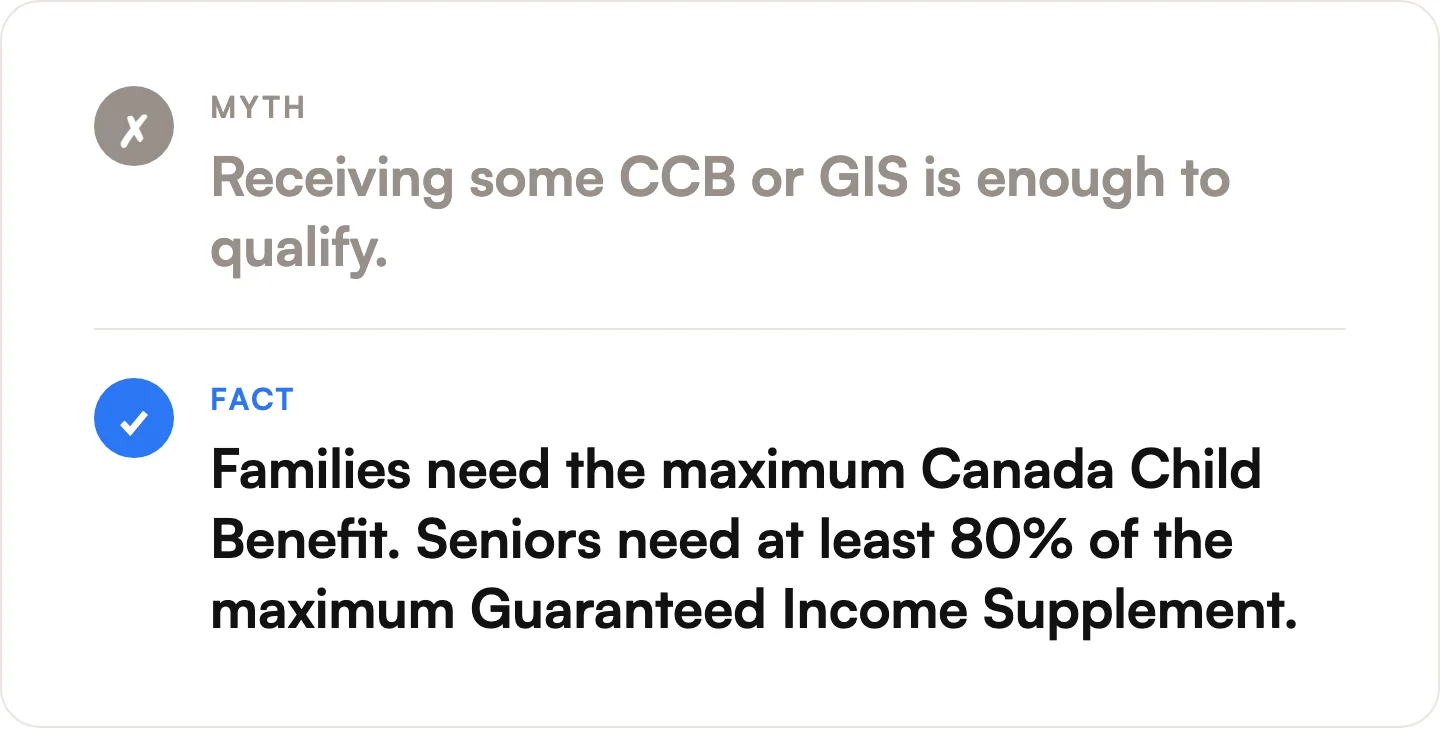
Keep in mind that meeting the income test doesn't guarantee a letter in any given year. A letter is required to sign up, and the government decides who receives one based on its annual review.
Lost Your Connecting Families Letter or Code?
If you've misplaced the letter or the 8-digit code, contact the Connecting Families Initiative team through the official portal (connecting-families.ca) or the assistance line. Going forward, keep a photo or written note of the code so you always have it on hand.
If no participating provider currently serves your area, hold on to your letter and code rather than throwing them out, because a provider may become available later. For anything the portal can't resolve, the registration help line at 1-833-206-0599 can walk you through it.
Connecting Families: Frequently Asked Questions
Is Connecting Families really free to apply for?
There's no application fee and no form to fill out. Eligibility is decided by the government, and you need an invitation letter to take part. The internet plan itself costs $10 or $20 a month plus tax.
Can I get a computer through Connecting Families?
Yes. Eligible households can request a low-cost digital device, such as a computer or tablet, while supplies last. The request is made alongside signing up for the internet plan.
What happens if I already have an internet contract?
If you're under contract with your current provider, you may owe the remaining value of that contract if you switch. Check the terms with your provider before you make the change.
Do I have to share personal details with the government to qualify?
No extra disclosure is needed. The government already identifies eligible households from existing CCB and GIS benefit data, and the invitation letter is mailed to your address automatically.
When does the Connecting Families program end?
Program dates can change over time. For the current status and any end date, check the official ISED Connecting Families page rather than relying on third-party listings. Third-party directories sometimes list an end date that ISED has not published, so treat the government page as the authority.
The Bottom Line
Connecting Families isn't something you apply for in the usual sense. The path is: confirm you receive the maximum CCB or the GIS, keep your taxes filed so the government can assess you, watch for the invitation letter, then register online and choose a provider. If you qualify but haven't been contacted, make sure your benefits and tax filings are in order, because eligibility is reviewed every year.
Cheap internet takes one fixed cost off a tight budget, but it doesn't help when a bill lands a few days before your benefit payment does. For those timing gaps, Bree is an interest-free line of credit of up to $750 built for Canadians between payments. It accepts government benefits like the Canada Child Benefit as income, runs no credit check, is free to use, and lets you repay on your own schedule.
Sources
- Innovation, Science and Economic Development Canada: Connecting Families Initiative
- Innovation, Science and Economic Development Canada: Connecting Families Eligibility
- Innovation, Science and Economic Development Canada: Connecting Families Invitation Letter
- Innovation, Science and Economic Development Canada: Connecting Families Low-Cost Plans
- Connecting Families Registration Portal
- Computers for Success Canada: Connecting Families Initiative

Join our newsletter to get the latest updates