The next GST payments land on and October 5, 2026, followed by January 5, 2027 and April 5, 2027. These are the quarterly payment dates for the 2026-2027 benefit year, and they are still based on your tax return, still tax-free, and still automatic.
One big thing changed in July 2026. The GST/HST credit was renamed the Canada Groceries and Essentials Benefit (CGEB), and the amount went up about 25%. Same payment, same schedule, same eligibility, bigger cheque. If you were expecting your usual GST credit, it still arrives on the same dates. Below is the full schedule, how much you can get this year, the one-time top-up that went out in June, and what to do if a payment does not show up.
Key Takeaways
- GST payments are paid quarterly on the 5th of January, April, July, and October. If the 5th is a weekend or holiday, you get paid the last business day before.
- The 2026-2027 payment dates are July 3, 2026, October 5, 2026, January 5, 2027, and April 5, 2027.
- The GST/HST credit is now the Canada Groceries and Essentials Benefit (CGEB) as of July 2026, with a 25% increase locked in for five years.
- Maximum amounts for 2026-2027 are $679 for a single adult, $890 for a couple, and $234 per child under 19 (up from $533, $698, and $184 last year).
- A one-time top-up worth 50% of your 2025-2026 GST credit was paid on June 5, 2026, on top of your regular payments.
- You never apply. File your taxes every year, even with no income, and the CRA works out your amount automatically.

GST Payment Dates for 2026-2027
GST payments are issued on the 5th of January, April, July, and October. When the 5th falls on a weekend or a federal holiday, the CRA sends the money on the last business day before the 5th instead. That rule is why some payments arrive a day or two early.
Here are the payment dates for the 2026-2027 benefit year, which runs from July 2026 through June 2027 and is based on your 2025 tax return.
The July payment shows up on the 3rd because July 5, 2026 is a Sunday. You can confirm your own dates any time in your CRA My Account, and the official schedule is posted on the Canada Revenue Agency payment dates page.
If your total credit for the year works out to less than $50 per quarter, the CRA usually pays the whole year at once in July instead of splitting it into four small deposits.
The GST/HST Credit Is Now the Canada Groceries and Essentials Benefit
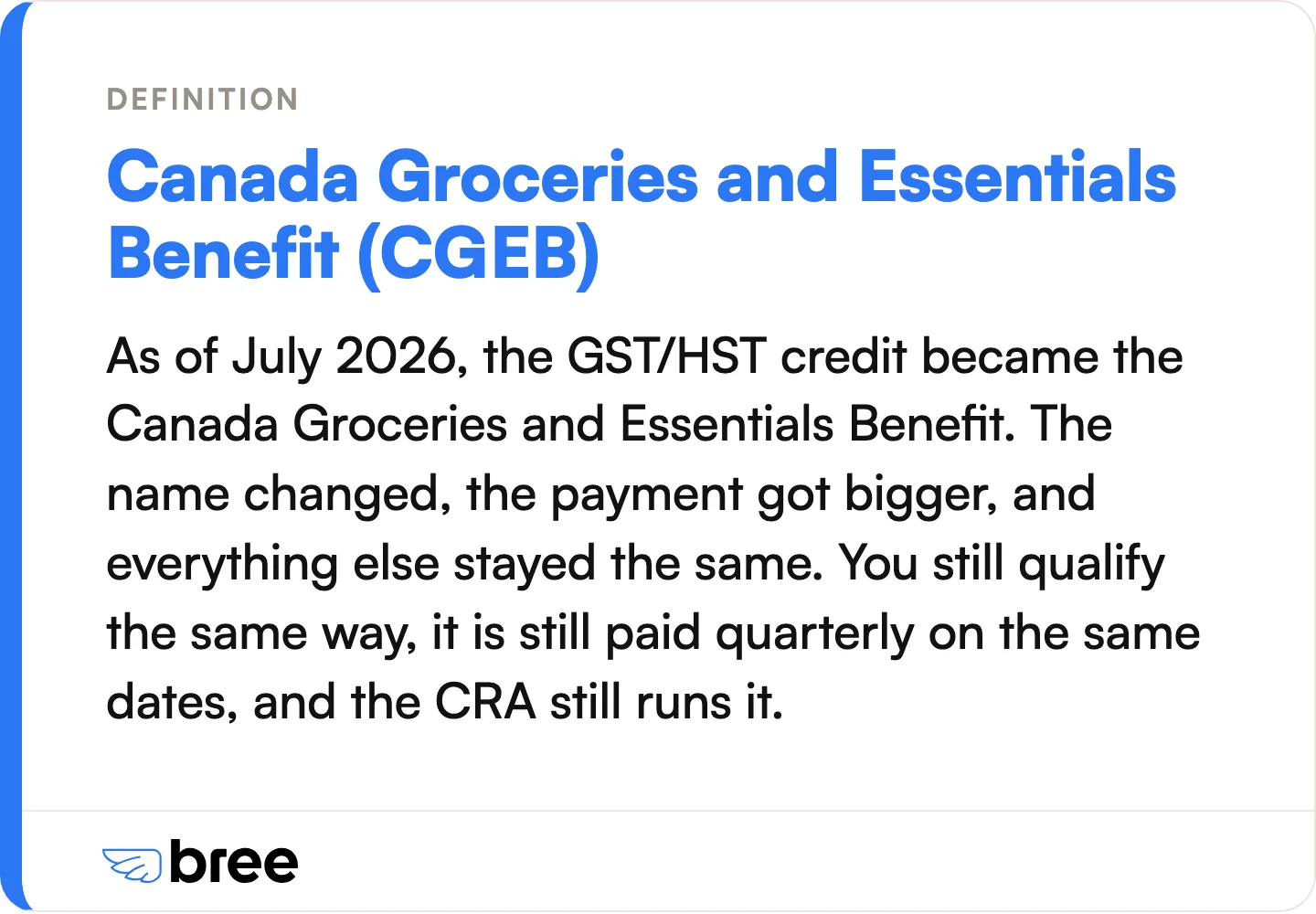
As of July 2026, the GST/HST credit became the Canada Groceries and Essentials Benefit (CGEB). The name changed, the payment got bigger, and everything else stayed the same. You still qualify the same way, it is still paid quarterly on the same dates, and the CRA still runs it.
The change came through Bill C-19, which increased the benefit by about 25% for five years, from 2026 through 2031. The goal was to help low and modest income Canadians keep up with the cost of groceries and other essentials.
If you search for "GST payment dates," you are in the right place. Most people still call it the GST credit, and the CRA kept the same schedule, so nothing about how you receive it has changed. The only real difference you will notice is a larger deposit.
How Much Will You Get in 2026-2027?
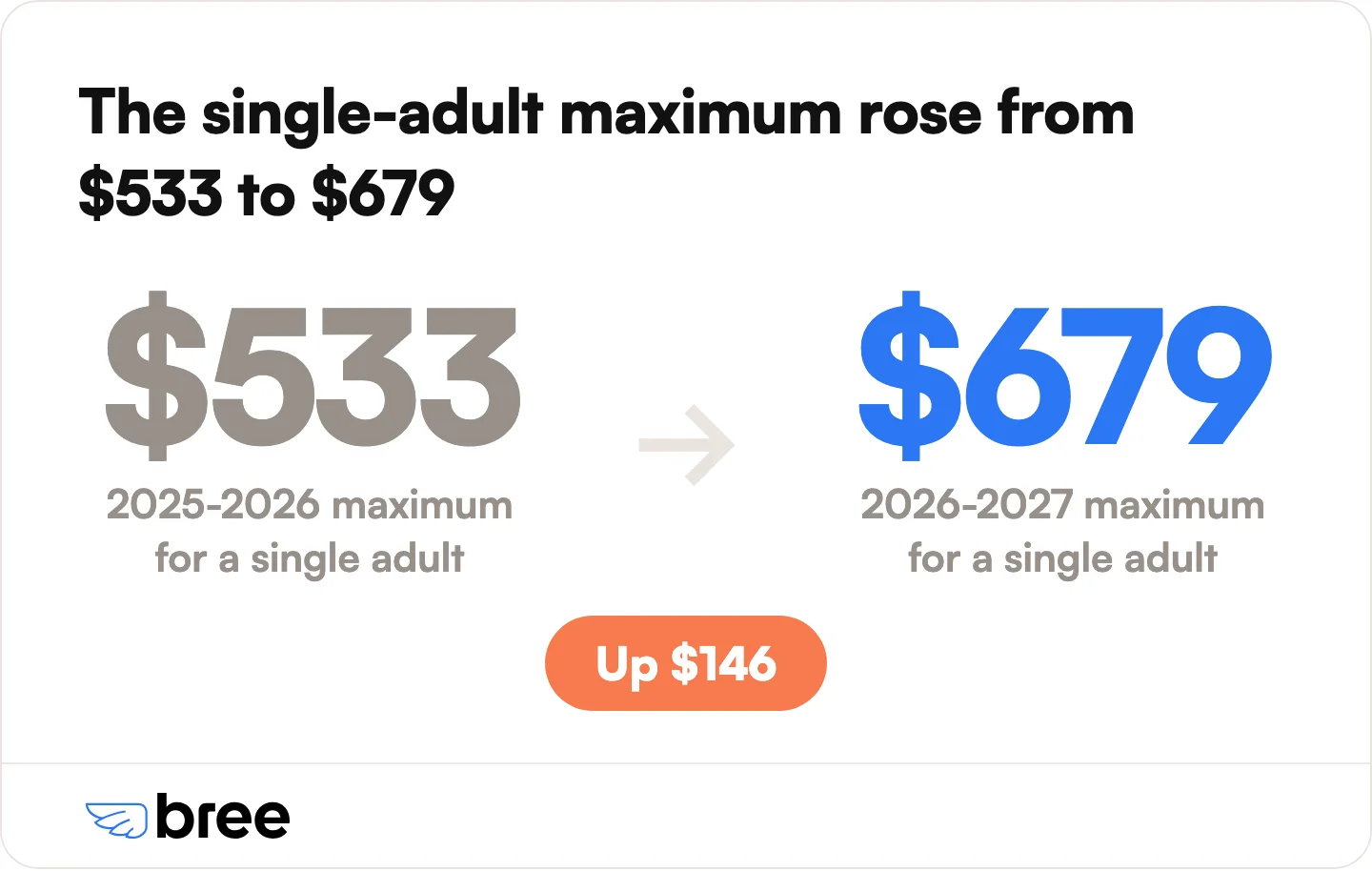
The maximum amounts for the 2026-2027 benefit year are $679 for a single adult, $890 for a married or common-law couple, and $234 for each child under 19. These are the enhanced CGEB amounts, up from $533, $698, and $184 the year before.
These are the maximum yearly amounts, split across your four quarterly payments. What you actually get depends on your family's net income. The credit starts to shrink once your adjusted family net income passes about $45,500 (based on the 2024 tax year, indexed slightly higher for 2025), and it drops by 5% of every dollar above that line. Higher earners phase out completely.
You do not need to calculate any of this yourself. When you file your taxes, the CRA figures out your exact amount and tells you what to expect in your CRA My Account.
The One-Time Top-Up Payment (June 2026)
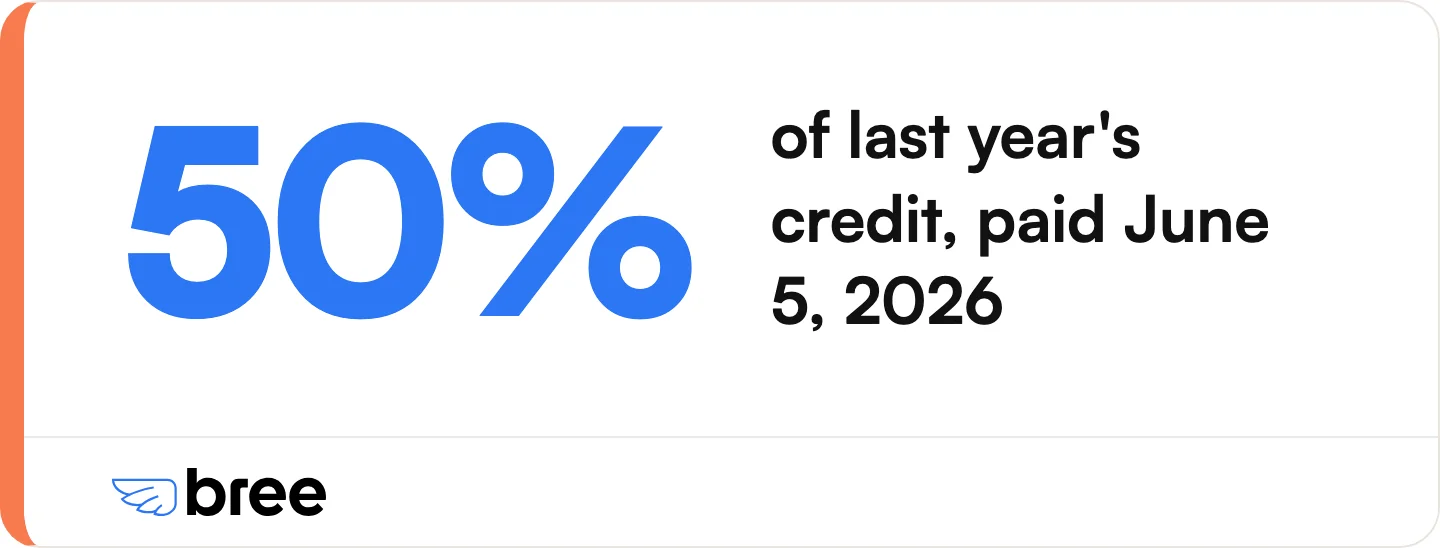
A one-time top-up payment went out on June 5, 2026, worth 50% of your total 2025-2026 GST/HST credit. It was automatic, so there was nothing to apply for. To get it, you had to be eligible for the GST/HST credit in January 2026 and have filed your 2024 tax return.
This is where a lot of the confusion online comes from. You may have seen posts about an "extra GST payment," "$250," or "$680" landing in bank accounts. Here is the plain version:
- The $680 figure is close to the new single-adult yearly maximum ($679). It is your regular benefit for the year, not a bonus.
- The $250 figure comes from a separate, earlier federal one-time payment, not the GST credit or the CGEB. Do not count it as part of your quarterly GST payments.
- The one-time top-up was a separate amount equal to half of last year's credit, paid in June 2026.
- Your regular quarterly payments continue on the normal schedule above.
So depending on your situation, you may have received the June top-up and your regular July payment close together. Both are real, and both are yours to keep tax-free.
Who Qualifies for the GST Credit
You qualify for the GST credit (now the CGEB) if you are a resident of Canada for tax purposes and you are at least 19 years old. Your income has to fall under the CRA's thresholds, which is why filing your taxes matters even if you earned nothing.
If you are under 19, you can still qualify if at least one of these is true:
- You have (or had) a spouse or common-law partner.
- You are (or were) a parent who lives (or lived) with your child.
Newcomers to Canada can qualify too. If you are new to the country, you fill out Form RC151 to apply for your first year, and after that filing a tax return keeps you in the system. Government benefits like the CGEB do not count as taxable income, so receiving them will not raise your tax bill.
How to Get Your Payments
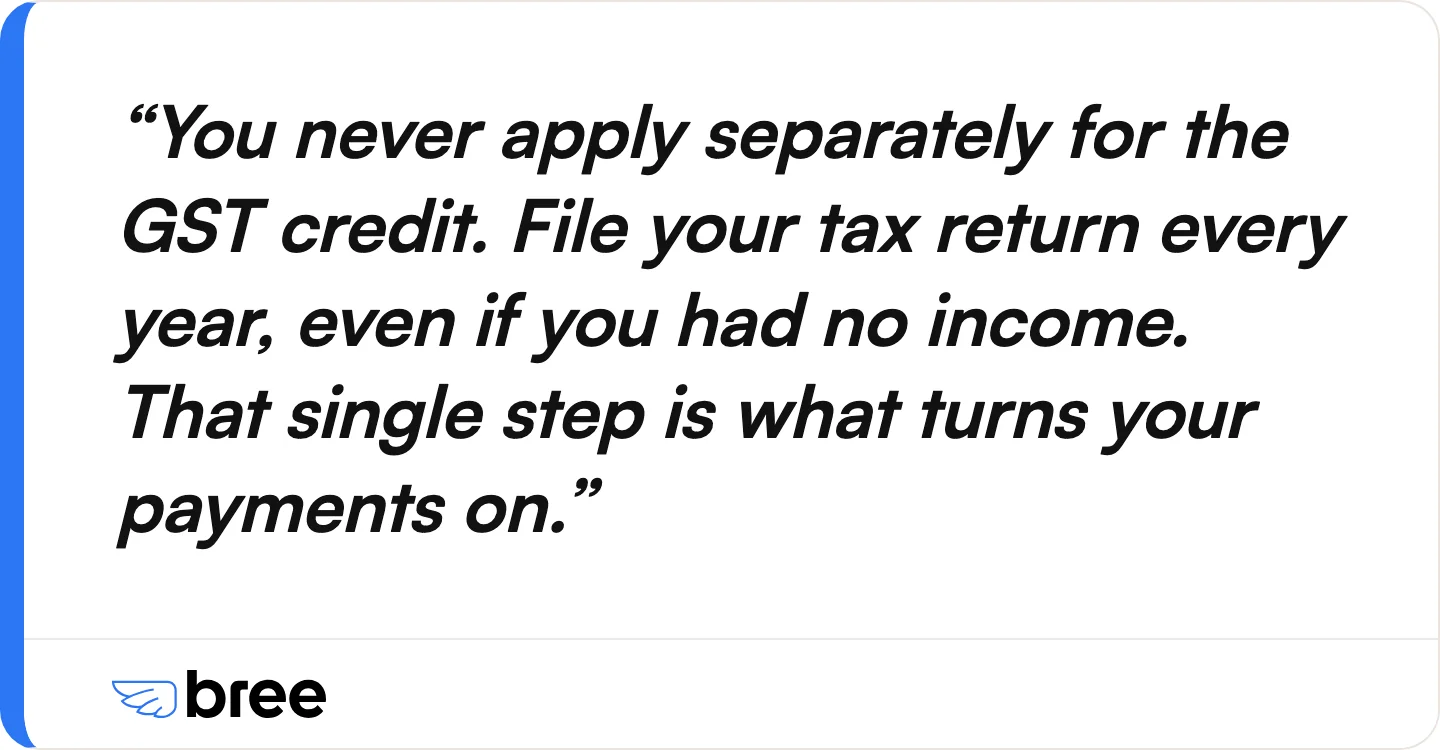
You never apply separately for the GST credit. File your tax return every year, even if you had no income, and the CRA automatically checks whether you qualify and how much you get. That single step is what turns your payments on.
To make sure your money arrives on time:
- File your taxes on time every year, income or not.
- Set up direct deposit in your CRA My Account so payments land straight in your bank account.
- Keep your address, marital status, and number of children up to date with the CRA.
- Report life changes like a new baby, a marriage, or a separation, since they change your amount.
Direct deposit is the fastest way to get paid. A mailed cheque can take several extra business days to arrive after the payment date.
What to Do If Your Payment Doesn't Arrive
If your GST payment does not show up on the scheduled date, wait 10 business days before contacting the CRA. Deposits and cheques can lag a little, especially around weekends and holidays.
If it still has not arrived after 10 business days, one of these is usually the reason:
- You did not file your 2024 tax return, so the CRA could not calculate your credit.
- You were not eligible for the credit in the payment month.
- Your spouse or common-law partner received the full family amount instead of you.
- Your payment was applied to a balance you owe the CRA.
You can check your payment status, confirm your eligibility, and update your banking details any time in your CRA My Account.
Provincial and Territorial Credits Paid With Your GST Credit
Several provinces and territories add their own credits to your federal GST payment, often in the same deposit. You do not apply for these separately either. Filing your taxes signs you up automatically if you qualify.
- BC climate action tax credit
- New Brunswick harmonized sales tax credit
- Newfoundland and Labrador income supplement and seniors' benefit
- Northwest Territories cost of living offset
- Nova Scotia affordable living tax credit
- Ontario sales tax credit, paid through the Ontario Trillium Benefit
- Prince Edward Island sales tax credit
- Saskatchewan low-income tax credit
- Yukon government carbon price rebate
If you live in Ontario, your sales tax credit is bundled into the Ontario Trillium Benefit, which follows its own monthly schedule. It is worth checking so you know which deposit is which.
Frequently Asked Questions
When is the next GST payment in 2026?
The next GST payment is on October 5, 2026. After that, the 2026-2027 payments continue on January 5, 2027 and April 5, 2027. Payments are always issued on the 5th of the month, or the last business day before if the 5th is a weekend or holiday.
Are we getting an extra GST payment in 2026?
Yes. A one-time top-up worth 50% of your 2025-2026 GST/HST credit was paid on June 5, 2026, on top of your regular quarterly payments. It was automatic for anyone eligible for the GST credit in January 2026 who filed a 2024 tax return.
Is the GST credit going up in 2026?
Yes. As of July 2026 the GST/HST credit became the Canada Groceries and Essentials Benefit, with a roughly 25% increase locked in for five years. The maximum for a single adult rose from $533 to $679.
How much is the GST credit for 2026-2027?
The maximum amounts are $679 for a single adult, $890 for a couple, and $234 for each child under 19. Your actual amount depends on your family net income and starts to reduce once your adjusted family net income passes about $45,500.
Do I have to apply for the GST credit?
No. The CRA determines your eligibility automatically when you file your tax return. You just have to file every year, even if you had no income, to keep your payments coming.
Is the GST credit taxable?
No. The GST credit and the Canada Groceries and Essentials Benefit are tax-free. You do not report either one as income on your tax return.
Why is it now called the Canada Groceries and Essentials Benefit?
The federal government renamed and increased the GST/HST credit in July 2026 to help low and modest income Canadians with the rising cost of essentials. The eligibility rules and payment schedule did not change, only the name and the amount.
Can newcomers to Canada get the GST credit?
Yes. Newcomers can qualify if they meet the residency and income rules. You apply for your first year using Form RC151, and after that filing a Canadian tax return keeps you enrolled.
Bridge the Gap Between GST Payments With Bree
GST payments only come four times a year, and life does not wait for the 5th of the month. Rent is due on the 1st, the car breaks down mid-quarter, or groceries run short before the next deposit. That gap is exactly where a lot of Canadians get pushed toward payday lenders charging 365% to 391% interest.
At Bree, we offer interest-free cash advances of up to $750 to Canadians between paycheques, with no credit check and government benefits accepted as income. There is 0% APR, no mandatory fees, and no late penalties, so you are not trading one money problem for a bigger one. If you are on a fixed benefit schedule and a bill lands before your payment does, an advance can cover the gap and get repaid when your money arrives.
More than 600,000 Canadians use Bree, and it holds a 4.8 out of 5 rating on Trustpilot. You can see how a Bree cash advance works or read real reviews from members.
The Bottom Line
Your GST payments for 2026-2027 arrive on July 3, 2026, October 5, 2026, January 5, 2027, and April 5, 2027, and they are bigger this year now that the credit has become the Canada Groceries and Essentials Benefit. File your taxes, set up direct deposit, and the money handles itself. For a fuller picture of who qualifies and how the amount is worked out, see our guide to GST/HST credit eligibility.
When a benefit date and a bill date do not line up, Bree is built for exactly that gap. We are a Canadian cash advance app offering interest-free advances of up to $750 with no credit check, so government benefit recipients can bridge the wait without paying predatory interest. If you need a little breathing room before your next payment, get started with Bree.
Sources
- Canada Revenue Agency: Canada Groceries and Essentials Benefit payment dates
- Canada Revenue Agency: Canada Groceries and Essentials Benefit
- Canada Revenue Agency: One-time GST/HST credit top-up payment
- Canada Revenue Agency: GST/HST credit eligibility
- Department of Finance Canada: First enriched Canada Groceries and Essentials Benefit payment
- Canada Revenue Agency: Free tax clinics

Join our newsletter to get the latest updates