
Losing a spouse or common-law partner brings grief and, often, real financial worry. One of the first questions many Canadians ask is simple: how long will I receive CPP survivor benefits? The short answer is that the Canada Pension Plan (CPP) survivor's pension is a lifetime benefit. Once it starts, it continues for the rest of your life, and it does not stop if you remarry.
We built Bree to help Canadians cover costs between payments, so we know the weeks-long wait for a first CPP payment can be one of the hardest parts of an already hard time. This guide walks through how long the survivor's pension lasts, how much it pays in 2026, who qualifies, the one-time death benefit, and exactly how to apply.
Key Takeaways
- CPP survivor benefits are paid for life. The survivor's pension does not end if you remarry or start a new common-law relationship. It stops only on your own death.
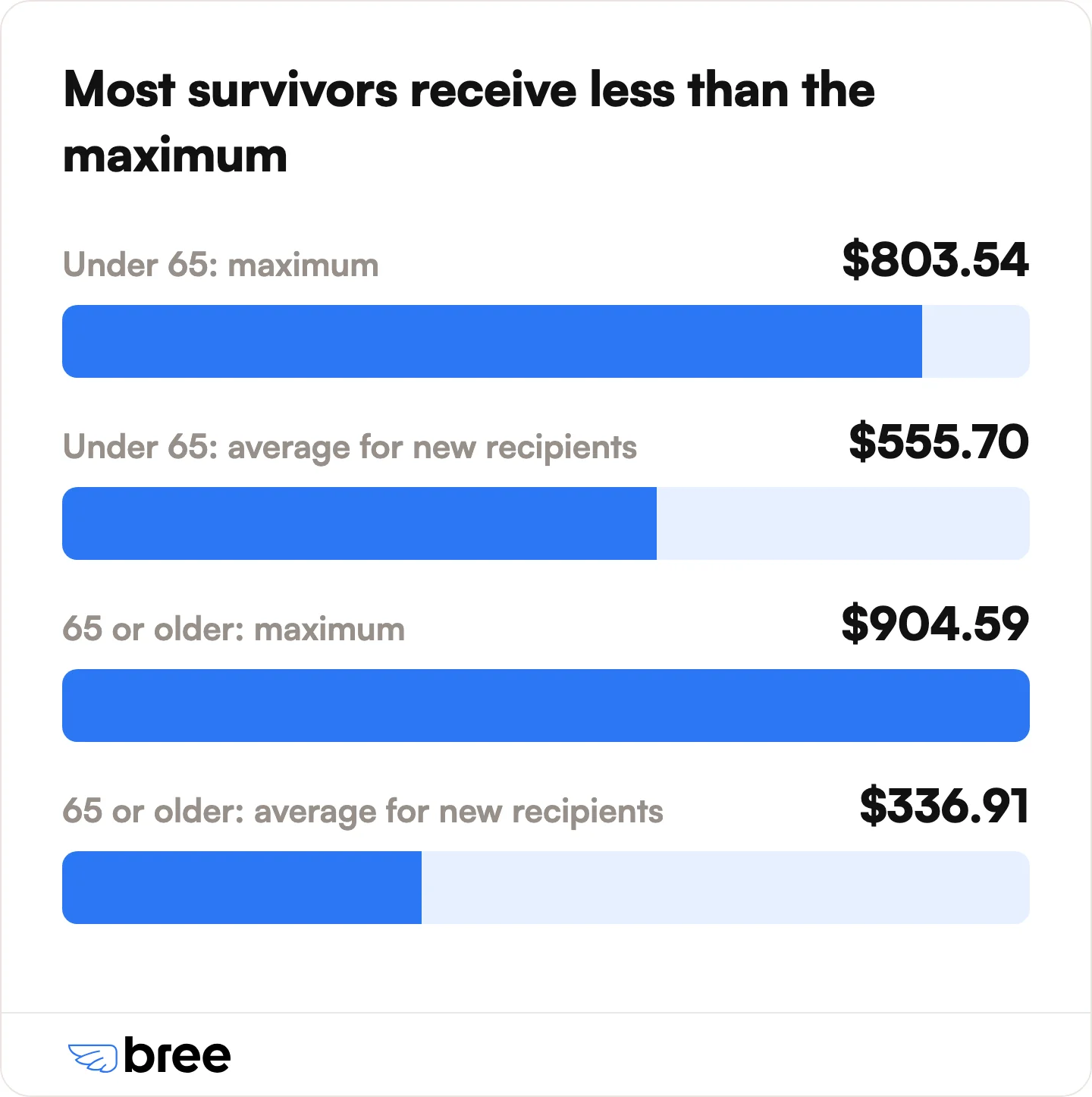
- The 2026 maximum survivor's pension is $803.54 a month if you are under 65, and $904.59 a month if you are 65 or older. Most people receive less than the maximum, because the amount is based on the deceased's contributions.
- The CPP death benefit is a one-time payment of $2,500, rising to a maximum of $5,000 in specific cases for deaths on or after January 1, 2025.
- If you also collect your own CPP pension, you cannot stack two full benefits. The combined payment is capped, which is why many survivor's pensions are smaller than people expect.
- One application covers the survivor's pension, death benefit, and children's benefit. Apply as soon as possible, because back payments are limited to 12 months.

How Long Will I Receive CPP Survivor Benefits?
The CPP survivor's pension is paid for the rest of your life. It begins the month after the contributor's death and continues until you die, with no fixed end date and no review that can cut it off once it is approved.
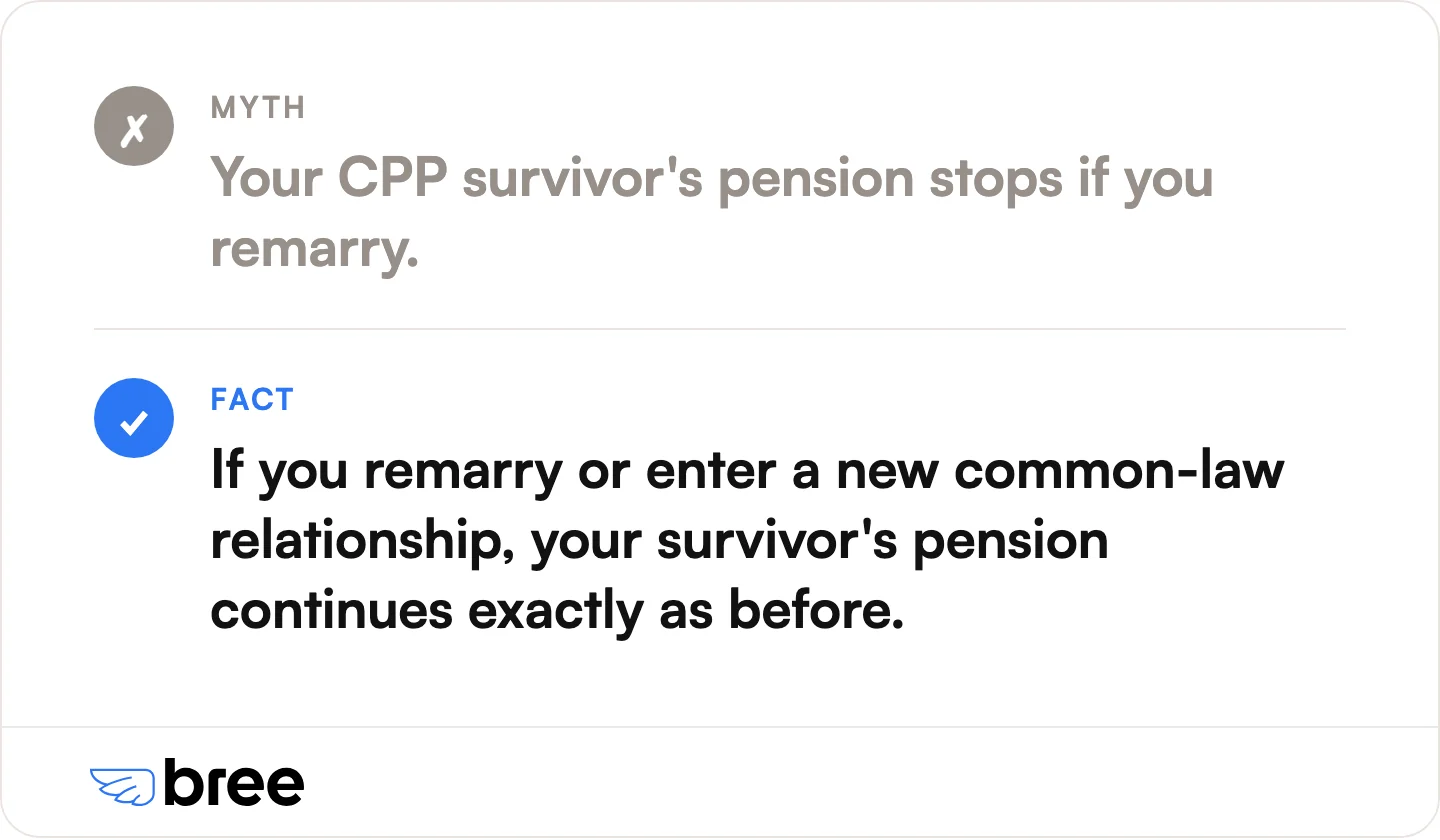
Remarriage does not change this. If you remarry or enter a new common-law relationship, your survivor's pension continues exactly as before, according to Service Canada. If you are widowed more than once, you do not collect two survivor's pensions. Service Canada pays only one, and it pays the larger of the two.
his lifetime payment is meant to be a stable base you can plan around. It usually replaces only part of a partner's income, so it works best alongside your own savings, other pensions, and any workplace or life insurance benefits.
How Much Is the CPP Survivor's Pension in 2026?
The CPP survivor's pension depends on two things: how much your partner paid into the CPP during their working life, and your age when they died. For 2026, the maximum is $803.54 a month if you are under 65 and $904.59 a month if you are 65 or older, according to canada.ca.
Most survivors receive less than the maximum. The maximum assumes the person who died contributed the most possible for a full career, which few people do.
The calculation works differently depending on your age:
- Age 65 or older: you receive 60% of the contributor's CPP retirement pension, provided you are not already receiving another CPP benefit.
- Under age 65: you receive a flat-rate portion plus 37.5% of the contributor's retirement pension.
These figures are set by Service Canada's CPP payment amounts and are adjusted every January.
Why Your Survivor Pension May Be Less Than the Maximum
If you already receive your own CPP retirement or disability pension, you cannot collect it in full on top of a full survivor's pension. The two are combined into a single monthly payment, and that combined amount is capped.
For 2026, the combined limits from canada.ca are:
- Survivor's pension plus your own retirement pension (at 65): up to $1,531.56 a month.
- Survivor's pension plus a disability benefit: up to $1,756.14 a month.
Here is how that plays out. Say you are 68 and already collect a CPP retirement pension close to the maximum. When your spouse dies, you do not simply add a full survivor's pension to what you already get. Your combined payment is held to the ceiling above, so the survivor's portion added on top may be small, and in some cases it can be zero. This is one of the most common surprises with CPP survivor benefits, and it catches many people off guard. If you also receive CPP disability, our guide to the CPP disability benefit explains how that side of the calculation works.
Who Is Eligible for CPP Survivor Benefits?
To receive the survivor's pension, you must have been the legal spouse or common-law partner of the person who died. A common-law partner is someone who lived with the contributor in a conjugal relationship for at least one continuous year, according to Service Canada.
The contributor also needs a minimum CPP contribution history. They must have contributed in at least one-third of the calendar years in their contributory period, with a minimum of three years, or in at least ten calendar years overall.
A few less common situations:
- Separated legal spouse: a separated legal spouse can qualify if the contributor had no common-law partner. However, a separated legal spouse is not eligible if their CPP credit-split request was received and approved in January 2025 or later for that same contributor.
- Remarriage: you keep the survivor's pension if you remarry. It is yours for life once approved.
- Quebec: CPP covers you if the person worked outside Quebec. Work in Quebec falls under the Quebec Pension Plan (QPP), which has its own survivor rules.
The CPP Death Benefit: Up to $5,000 in 2026
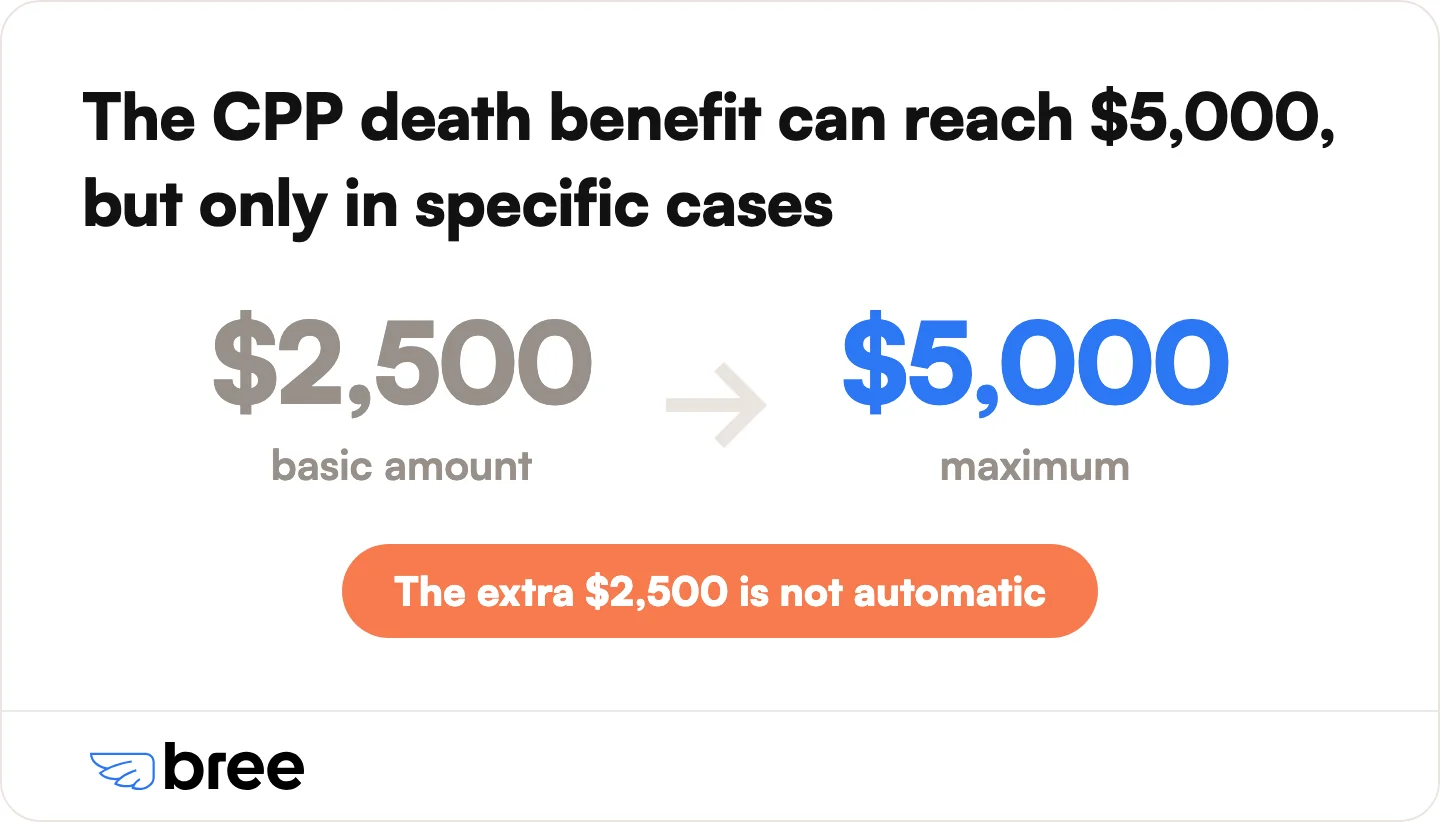
The CPP death benefit is a one-time payment made after a contributor dies. The basic amount is $2,500. For deaths on or after January 1, 2025, an estate can receive an additional $2,500, for a maximum of $5,000, according to Service Canada.
The extra $2,500 is not automatic. It applies only when the person who died never received a CPP or QPP retirement or disability pension, and left no surviving spouse or common-law partner eligible for a survivor's pension. In most cases where a spouse survives, the death benefit is the basic $2,500.
You may have seen references to a "$10,000 death benefit." That figure comes from past proposals, not current law. The enacted maximum for 2026 is $5,000, and only in the specific case above.
Who should apply for the death benefit, in order:
- The executor of the estate, who should apply within 60 days of the death.
- If there is no estate or the executor does not apply, the person or institution that paid the funeral expenses.
- After that, the surviving spouse or common-law partner.
- Finally, the next of kin.
The CPP Children's Benefit
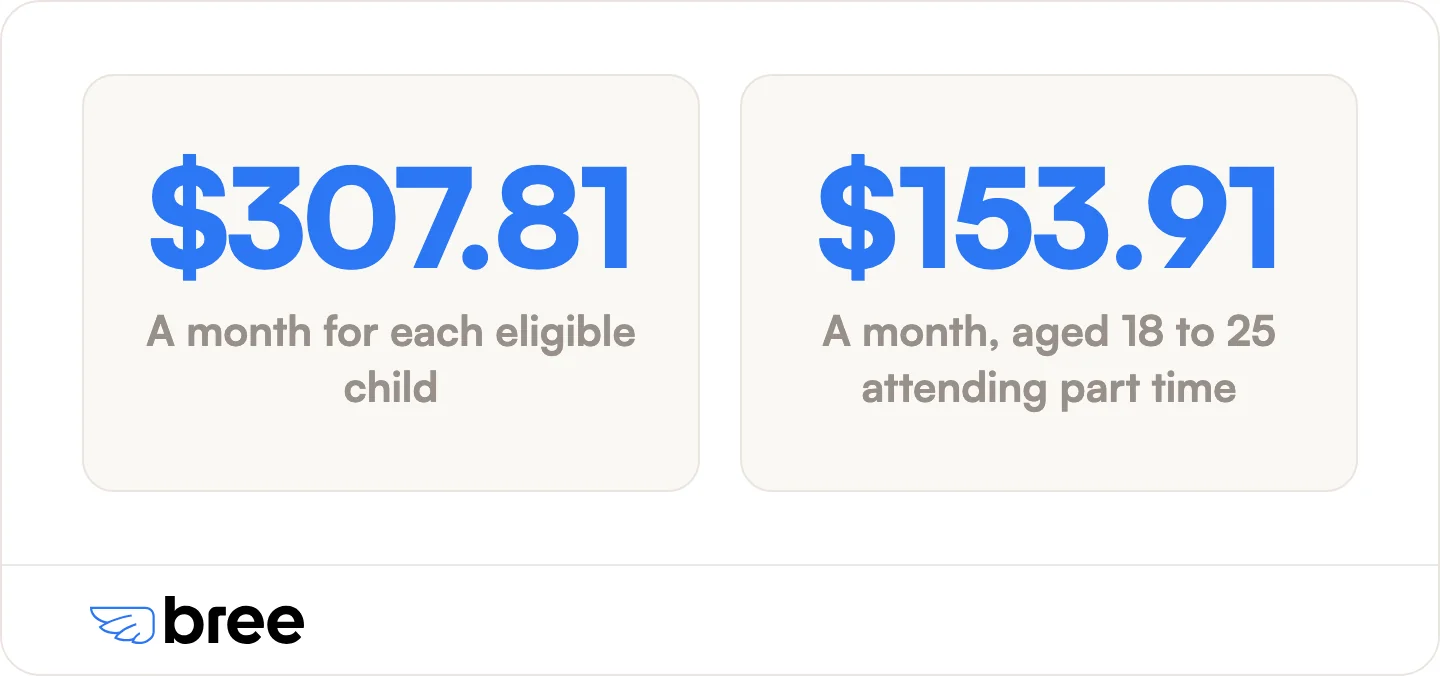
The CPP children's benefit is a monthly payment for a dependent child of a contributor who has died. For 2026 the flat-rate amount is $307.81 a month for each eligible child, according to Service Canada's payment amounts.
A child qualifies if they are under 18, or between 18 and 25 and attending a recognized school or university full time. A child aged 18 to 25 attending part time receives half the flat rate, or $153.91 a month. A child can receive up to two children's benefits at once if both parents contributed enough to the CPP and have died.
The Allowance for the Survivor (Ages 60 to 64)
The Allowance for the Survivor is a separate, needs-based monthly benefit for low-income Canadians aged 60 to 64 whose spouse or common-law partner has died. It comes from the Old Age Security program, not the CPP, and it can be paid on top of a CPP survivor's pension.
For 2026, the Allowance for the Survivor pays up to $1,726.18 a month, and your annual income must be under $25,272 to qualify, according to Service Canada. You must also be a Canadian resident, be widowed, and not have remarried or entered a new common-law relationship. If you are tracking Old Age Security dates as well, our OAS payment dates guide has the full schedule.
How to Apply for CPP Survivor Benefits
One application covers all three benefits: the survivor's pension, the death benefit, and the children's benefit. You are responsible for applying for your own survivor's pension, and if you are unable to apply yourself, a representative can apply on your behalf.
You can apply two ways:
- Online, through your My Service Canada Account. This is the fastest route and lets you upload documents directly.
- On paper, using the "Application for a CPP Survivor's Pension and Children's Benefits" (form ISP1300) and the "Application for a CPP Death Benefit" (form ISP1200). You can download these from canada.ca or pick them up at a Service Canada office.
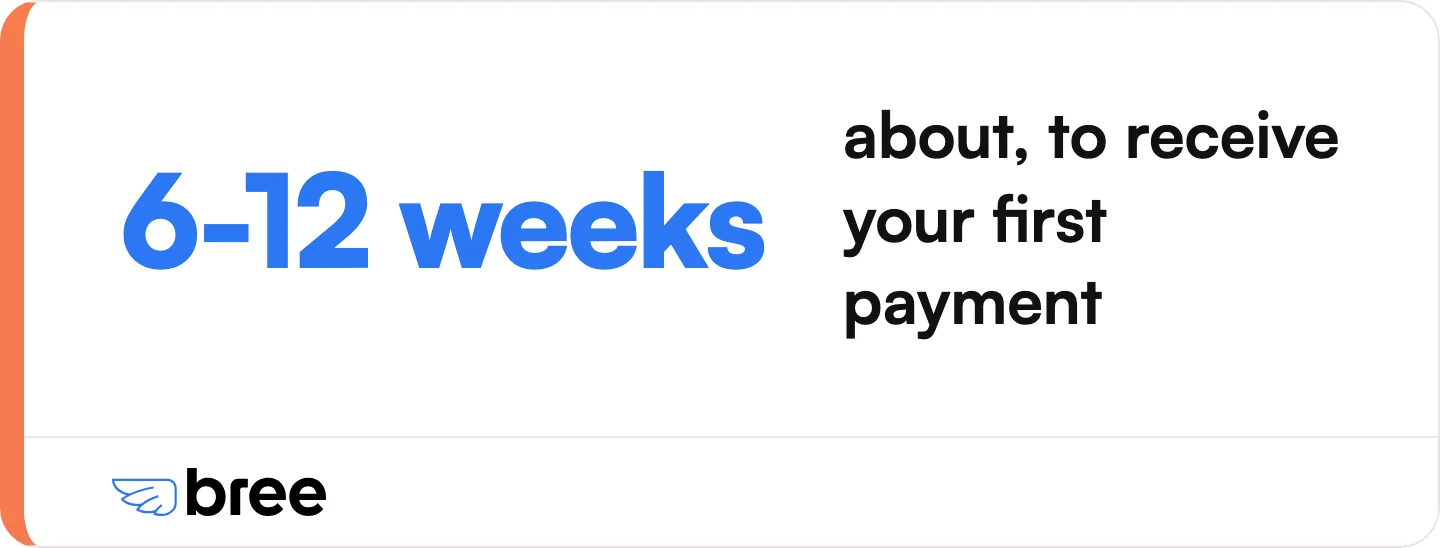
Apply as soon as you can. Back payments are limited to a maximum of 12 months, so a delay can cost you money you were entitled to. After Service Canada receives your completed application, it takes about 6 to 12 weeks to receive your first payment. If you are mapping out when government money lands, our CPP payment dates guide covers the monthly schedule.
Are CPP Survivor Benefits Taxable?
Yes. CPP survivor benefits are taxable income. Both the monthly survivor's pension and the one-time death benefit count toward your income for the year.
Service Canada sends you a T4A(P) slip each year showing the benefits you received, and you report the survivor's pension on your tax return. The death benefit is usually taxed as income of the estate. If you receive the Guaranteed Income Supplement or the Allowance for the Survivor, contact Service Canada: you can ask to have the death benefit left out of your income for the purpose of calculating those income-tested benefits, which can protect your monthly support.
If You Disagree With a Service Canada Decision
If you disagree with a decision about your survivor benefits, whether about eligibility or the amount, you can ask Service Canada to reconsider. You must make this request in writing within 90 days of receiving your decision letter, according to Service Canada. A staff member who was not involved in the first decision reviews your file.
If you still disagree after the reconsideration, you have another 90 days to appeal to the Social Security Tribunal, an independent body that handles these cases.
Bridging the Gap While You Wait for CPP
The 6-to-12-week wait for a first CPP payment can be the hardest part. Funeral costs arrive right away, rent and groceries do not pause, and the death benefit takes time to process. If you need to cover costs in the meantime, Bree can help.
Bree is an interest-free line of credit of up to $750, built for Canadians who need to bridge a gap between payments. Here is how it fits this situation:
- No credit check. Approval is based on your bank account history, not your credit score.
- Government benefits count as income. CPP and other benefits can qualify you, which matters when a survivor's pension is part of your income.
- Free to use. There is no interest and there are no mandatory fees. Bree makes money from optional tips.
- Direct deposit to your bank account. Standard delivery is free. Optional Express delivery gets you cash in minutes for an optional fee.
- Repay on your own schedule. You will see your terms before you accept, and it is not a payday loan.
If a temporary cash shortfall is adding to the stress, you can get started with Bree and see what you qualify for. You can also read real Bree reviews from other Canadians first.
Frequently Asked Questions
Does CPP stop after death?
The contributor's own CPP retirement pension stops when they die, but their contributions can fund a survivor's pension for their spouse or common-law partner, a children's benefit, and a one-time death benefit. The survivor's pension is then paid for the rest of the survivor's life.
How much is the CPP survivor's pension per month in 2026?
For 2026, the maximum CPP survivor's pension is $803.54 a month if you are under 65 and $904.59 a month if you are 65 or older, according to canada.ca. Most people receive less, because the amount depends on the deceased's CPP contributions.
Who claims the $2,500 CPP death benefit?
The executor of the estate should apply for the death benefit within 60 days of the death. If there is no estate or the executor does not apply, the person who paid the funeral costs, then the surviving spouse or common-law partner, then the next of kin can apply, in that order.
What is the "$10,000 death benefit" in Canada?
There is no $10,000 CPP death benefit. That figure comes from past proposals. The current CPP death benefit is $2,500, with a possible top-up to a maximum of $5,000 for deaths on or after January 1, 2025, in limited cases.
Are CPP survivor benefits taxable?
Yes. Both the monthly survivor's pension and the one-time death benefit are taxable income. Service Canada issues a T4A(P) slip each year, and the death benefit is usually taxed as income of the estate.
Will I lose my survivor's pension if I remarry?
No. Once your CPP survivor's pension starts, it continues for life. Remarriage or a new common-law relationship does not reduce or cancel it.
Can a separated spouse and a common-law partner both claim the benefit?
No. Only one person receives the survivor's pension. Service Canada gives priority to the common-law partner who was living with the contributor at the time of death. A separated legal spouse may qualify only if the contributor had no eligible common-law partner.
The Bottom Line
CPP survivor benefits are a lifetime payment. Once your survivor's pension is approved, it continues for the rest of your life, it does not stop if you remarry, and it works alongside the one-time death benefit and the children's benefit. The amount depends on your partner's contributions and your age, and if you already collect your own CPP, the combined payment is capped, which is why so many survivor's pensions come in smaller than expected. Apply early, because back payments only reach 12 months.
The hardest stretch is usually the 6-to-12-week wait before the first payment lands. Bree offers an interest-free line of credit of up to $750 with no credit check, and accepts government benefits like CPP as income. More than 600,000 Canadians have chosen Bree as a transparent alternative to high-interest payday loans. If you are facing a gap while your survivor benefits are processed, you can see what Bree offers.
Sources

Join our newsletter to get the latest updates


